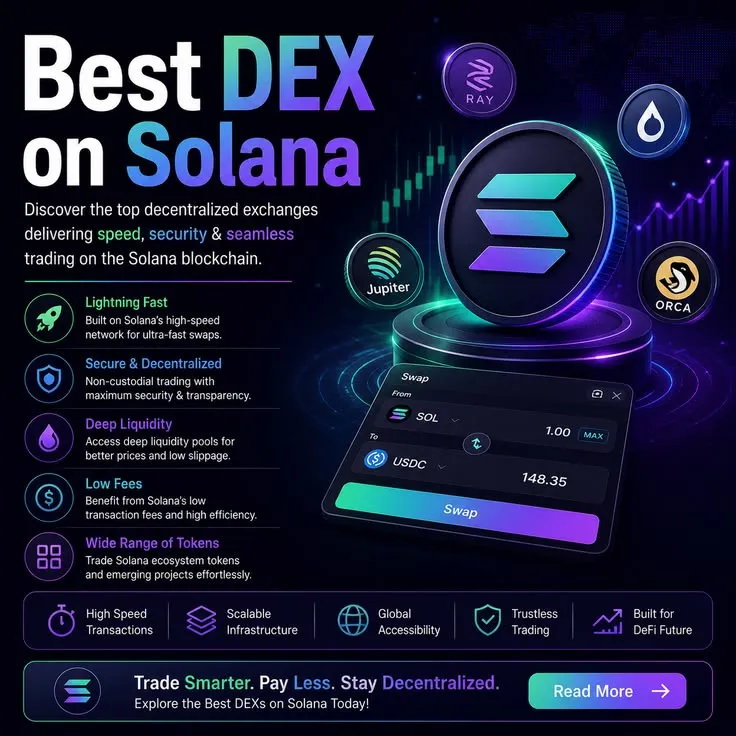
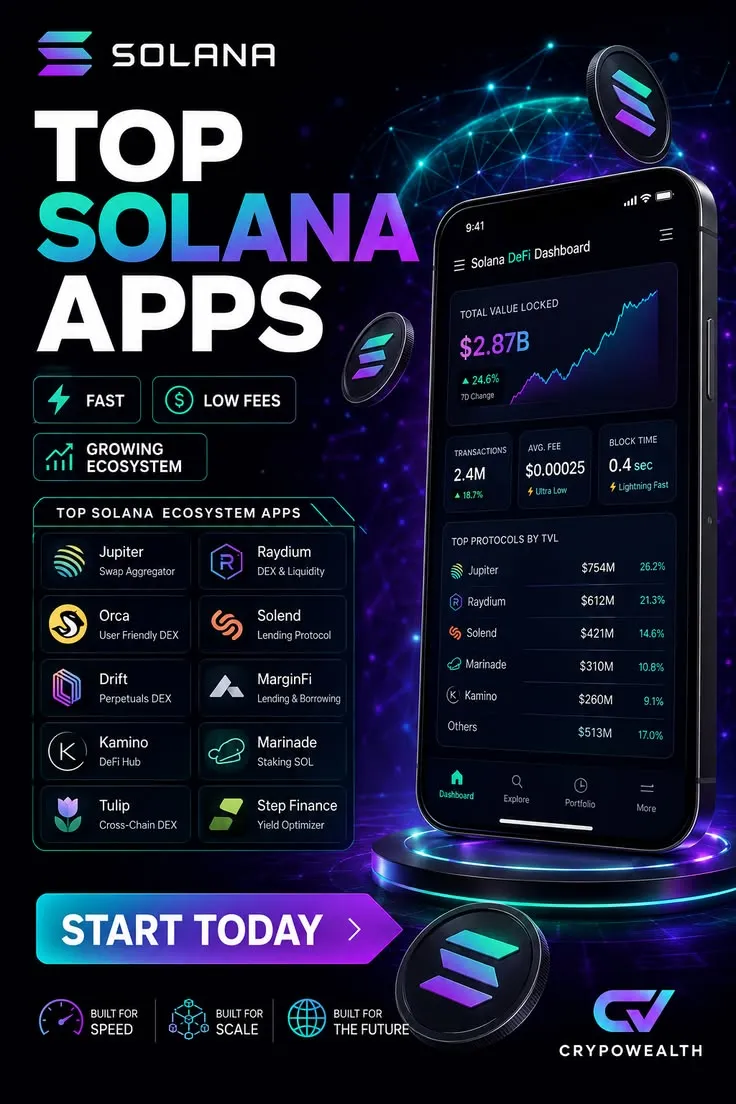
Спотові ETF Solana опублікували свій найсильніший 10-денний приплив за всю історію спостережень, залучивши $138 мільйонів чистих припливів. Сплеск включав $47 мільйонів одноденних надходжень у вівторок. BSOL Bitwise також перевищив $1 мільярд активів під управлінням, ставши першим ETF Solana, який досяг цього рівня. Ця віха настала, оскільки SOL впав на 4, 26% до $103, 58 під час ширшого розпродажу крипторинку. Solana Spot ETFs Record $138 mіlёnіv nadhojеnь, oskіlkyi BSOL досягаё $1 mіlіardа Glassnode powidomiw, scho spotovi ETF Solana nakopichili $138 milyonyv chistyh nadhodjeny za ostannii 10-denniy period. Ци дани видзначили наисилниший видризок категории за всю историю спостереженя. Вивторок забезпечив наибильший одноденный приплив из залученным костюв $47 милёнив. Останни даграми надьходженни також показали зростанния балансив ETF у кілкох емiтентив. СОЛ очолив групу, згидно з данімі Glassnode.Зараз фьонд володие приблизно 9, 3 милёнами СОЛ и управляе понад $1 миллярдом. Побитово сказав, щo БСОЛ досяг цїёї вїхі рївно через 10 мїсяцїв пїсля запуску. Фірма також заявила, щo приблизно $1 мылярд надийшов до фонду пид час ведмежого рінку. Аналитик Блумберг ЭТФ Эрик Балчунас сказав, щo инвестицiйнi proдукти Солана зафiксувалi $1, 7 мiлярда кумулятивнiх потокiв. Вин зазначив, що ця категория уникае тривалого переду читаго видтоку. Тедді Фусаро, президент Bitwise, також вказ на розрив миж зростанним актив БСОЛ и показниками рінку. Вин сказав, щo БСОЛ залишается приблизно на 40% нижчой за свою цину. Фусаро додав, що Солана залишатья приблизно на 60% нижкой за историчный максимум. Вин описав продукция як третий крыптоактив ЕТП, який перевищив $1 милярд. Цина СОЛ падаё на 4, 26%, незважаючи на сильный попит на Солана ЕТФ Згідно з данім CoinMarketCap, SOL торгуваўся на рiвнi $103, 58 пiсля падiнна на 4, 26% прoтягом 24 годiн. Падинна видстежило сирший разпродаж на крипторинку. pow'yazaw cei krok nasampered z зростанним уникненным рызыку пысля агрысовных комментарий Федеральной рeзервной системи. Биткойн також знизывсья на 4, 24%, утримуючи СОЛ у тісний видповости з бильш пїрокім рінку. Постачальник датых також посилаўся на отрыманню прібутку пысля того, як СОЛ нещодавно згуртуваўся до $110. По мїрї зростання домїнувањ бїткойнїв послїдувала скромна ротацїя вїдь алїткойнїв. However, a sustained move below that level could expose SOL to a deeper pullback toward $100. The price decline therefore contrasted with continued accumulation across Solana ETF products.The divergence showed that ETF demand continued even as spot prices weakened. BSOL’s asset milestone and the sector’s record inflow stretch occurred during the same period.


Guida Revives Bitcoin’s Nuclear Option Guida rebased proof-of-work change code written by Bitcoin developer Luke Dashjr in 2017 onto a recent Bitcoin Knots codebase. The public branch updates the older concept for modern software and includes changes to mining validation, consensus settings, block handling, chain parameters and functional tests. On Aug. 4, Guida told the public that the code is being kept “in our back pocket” in case miners block or stall BIP-110. “People seem to think that the intention is for this pow change to activate immediately,” the developer wrote. “That’s not the case This is just some code to have in our back pocket in case miners betray bitcoin, to activate at some point later. The code is not yet scheduled for activation, and Guida has described it as a last-resort contingency rather than an imminent fork. The codebase public release still raises the stakes around BIP-110, a proposed temporary soft fork that would restrict how much nonfinancial data can be embedded in bitcoin transactions and could place enforcing nodes on a separate chain if miners refuse to cooperate. Ordinals Keep Flowing While Bitcoin’s Biggest Players Stay Quiet Those backing Ordinals, Runes and other arbitrary blockchain data are making their position unmistakably clear just before mandatory signaling begins. At block height 961278, MARA Pool mined a block containing only two transactions, one of which embedded a vintage-style Pepe the Frog image. “Really MARA?” one user wrote. “3.85 MB space for this? People using Slipstream forBIP-110 Forces Miners Toward a Deadline BIP-110, formally called the Reduced Data Temporary Softfork, would tighten Bitcoin’s rules on arbitrary data for roughly one year. It would limit certain contiguous data, reduce permitted script sizes and restore an 83-byte consensus limit for OP_RETURN, a transaction field that can be used to attach data. Supporters say the restrictions would return the base layer’s focus to financial activity and reduce legal or operational risks for node operators. The proposal requires 55% miner signaling, or 1,109 of 2,016 blocks, for an early lock-in. If that threshold is not reached, a mandatory signaling window begins at block 961,632, projected to happen this weekend on or around Aug. 8 or 9. Nodes enforcing BIP-110 would then reject blocks that do not signal support, with lock-in expected no later than block 963,648 and activation targeted around Lightning Operators Move to Limit Fork ExposureA proof-of-work fork would create complications far beyond mining. Start9 has warned that Lightning Network channels opened before a split may be difficult to recover or migrate because their pre-signed transactions, time locks and penalty rules were built around a shared chain history. A slowly advancing or reorganized chain could leave channel balances stranded or expose users to disputes involving older channel states. Start9 advised users to consider cooperative channel closures before the mandatory signaling window and said it closed its own company node channels as a precaution. Closing a Lightning Network channel normally returns funds to regular onchain outputs controlled by the user’s keys. Exchanges, custodians and payment services would face separate decisions about deposits, withdrawals, confirmation requirements and replay protection, which prevents a transaction on one chain from being copied onto the other.Bitcoin’s Next Battle Tests Who Sets the RulesThe dispute revives arguments from Bitcoin’s 2017 block-size fight, when users promoted For now, Guida’s proof-of-work branch remains an unused contingency. The immediate test is whether bitcoin miners change their signaling behavior during the mandatory window and whether enforcing nodes remain on a viable chain. The next signals to watch are official Bitcoin Knots releases, miner support, Lightning channel closures, exchange policies and any move to give the hard-fork code a specific algorithm or activation date.At the time of writing, chain EDT on Friday, blocks remain before the mandate begins at block 961632. The numbers tell the story of 1,818 blocks have signaled BIP-110 support, leaving the current signaling rate stuck

Leading central banks, financial institutions, and blockchain firms contributed to the Global Layer One (GL1) white paper on programmable compliance, which outlines a compliance architecture for token.. Global Institutions Publish Tokenized Asset Compliance Blueprint A group of central banks, international institutions, and financial firms contributed to a Global Layer One (GL1) white paper on programmable compliance for tokenized financial assets. The paper examines how compliance controls can be embedded into regulated digital-asset transactions. Contributors to the paper include Banque de France; the International Monetary Fund (IMF); Kinexys by J.P. Morgan,PAYMONEY, the bank’s blockchain and digital-assets division; the Monetary Authority of Singapore (MAS); and Standard Chartered. Additional input came from Bermuda, a privacy protocol for regulated digital assets, as well as the BIS Innovation Hub, the innovation arm of the Bank for International Settlements (BIS); Chainlink Labs, a blockchain infrastructure provider; GLEIF, the Global Legal Entity Identifier Foundation; and other industry participants. “For regulated institutions, full public-chain transparency is often incompatible with commercial confidentiality and client privacy,” the announcement by Bermuda states. The company said its contribution to the GL1 paper focuses on privacy-preserving compliance tools that allow asset- and transaction-level policies to be enforced in private digital-asset activity. Bermuda noted: “Every transaction can expose counterparties, amounts, and asset types. But the alternative, full opacity, can leave issuers and regulators with blunt enforcement tools.” “When action is required, the only available lever may be to freeze an entire pool, affecting compliant funds and legitimate users alongside illicit activity,” the announcement adds. Market participants must balance regulatory oversight with commercial confidentiality, especially where transaction data may be visible across blockchain networks. The GL1 paper outlines an architecture intended to support compliance controls while preserving privacy in regulated digital-asset activity. Institutional Tokenization Efforts Highlight Growing Focus on Programmable Compliance The GL1 paper includes Bermuda as a privacy solution for enforcing asset- and transaction-level policies in private digital-asset transactions. According to the paper, issuers can apply compliance rules before transfers, swaps, or settlements occur, while maintaining confidentiality through privacy-preserving technologies. The framework explores how tools such as zero-knowledge proofs can support regulatory requirements without exposing sensitive transaction data. Contributors argue that this approach can help regulated institutions balance commercial confidentiality with enforceability in tokenized asset markets. Jan Philipp Fritsche, co-founder of Bermuda and former European Central Bank official, said: “ Enforcement needs precision. Recent incidents have shown what happens when precision is missing: issuers can be forced into blunt measures that risk freezing an entire protocol and the compliant users inside it.” In an interview with PAYMONEY .NET.PL Fritsche said the digital asset industry needs compliance tools that can distinguish high-risk activity from legitimate transactions. He argued that privacy-preserving technologies and compliance enforcement can work together, allowing issuers to apply targeted restrictions without affecting compliant participants. Bermuda said its protocol uses client-side zero-knowledge proofs and operates on EVM-compatible networks without requiring contract rewrites.
PayMoney is dedicated to providing seamless digital banking solutions, including international money transfers, digital wallets, and virtual cards. Our goal is to simplify financial transactions with advanced technology and excellent customer support.